
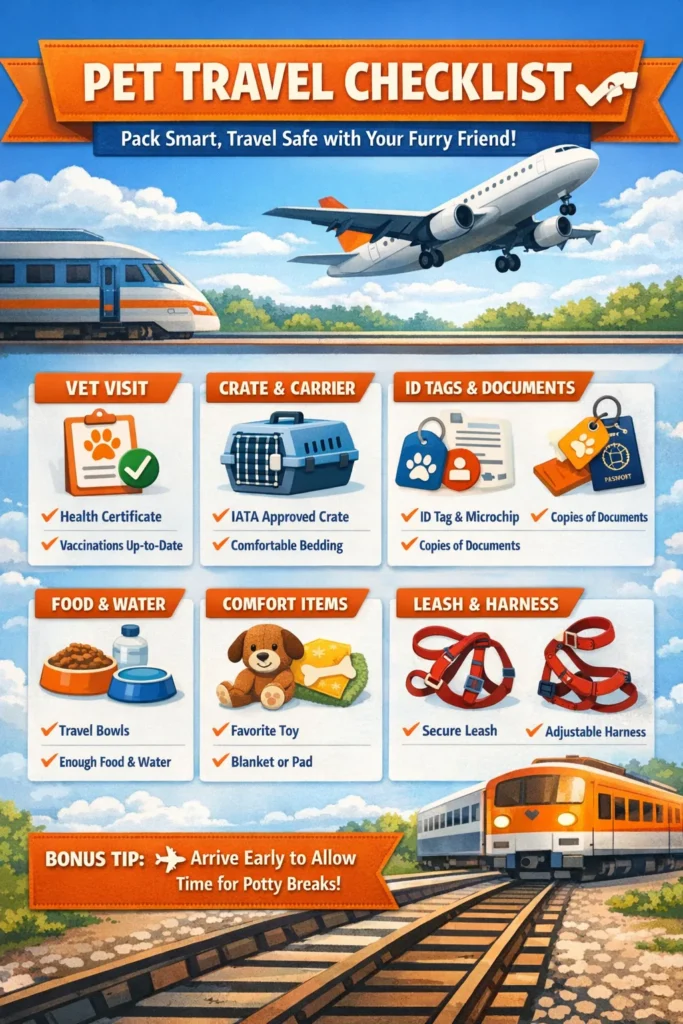
Traveling with pets is becoming increasingly common, but one of the biggest concerns for pet parents is: “Are dogs allowed in trains or flights?”
The answer is yes—but with conditions. Rules vary depending on the mode of transport, country, airline, and railway authority. Understanding these regulations ensures a safe, stress-free journey for both you and your dog.
Are Dogs Allowed in Trains?
Indian Railways Pet Policy
In Indian Railways, dogs are allowed, but the rules depend on the class of travel.
Where Dogs Are Allowed:
- First AC (1AC cabins):
Dogs are allowed if you book the entire cabin. - First Class Coupe:
Ideal for pet travel with privacy. - Luggage/Brake Van:
Dogs can travel in a designated pet box (not recommended for anxious pets).
Where Dogs Are NOT Allowed:
- Sleeper Class
- AC 2-tier / AC 3-tier
- Chair Car
Important Guidelines:
- Advance booking is required
- A fitness certificate from a veterinarian is mandatory
- Pet parents must carry food, water, and bedding
- Charges are applied based on pet weight
Are Dogs Allowed in Flights?
Airline Pet Policies
Most airlines allow dogs, but policies differ significantly.
In India, major airlines like:
- Air India
- Akasa Air
permit pets under specific conditions.
Cabin vs Cargo Travel
1. In-Cabin Travel (Limited Availability)
- Small dogs (usually under 7–10 kg including carrier)
- Must be in an airline-approved carrier
- Carrier should fit under the seat
2. Cargo Hold Travel
- Larger dogs travel in temperature-controlled cargo
- Requires strong, IATA-approved crates
International Airline Guidelines
Organizations like the International Air Transport Association set global standards for pet travel.
Key Requirements:
- Health certificate (issued within 7–10 days)
- Vaccination records
- Microchipping (for international travel)
- Proper ventilation in crates
Scientific Insights: How Travel Affects Dogs
Research published in journals like the Journal of Veterinary Behavior and Applied Animal Behaviour Science highlights how travel impacts pets.
Key Findings:
- Dogs may experience travel-related stress and anxiety
- Noise, vibration, and unfamiliar environments increase cortisol levels
- Proper crate training significantly reduces stress
Preparing Your Dog for Train or Flight Travel
1. Visit a Veterinarian
Ensure your dog is:
- Fit for travel
- Vaccinated
- Not prone to severe anxiety
2. Crate Training is Essential
Dogs should feel safe and comfortable inside their crate.
3. Avoid Feeding Before Travel
- Feed 4–6 hours before departure
- Prevents motion sickness
4. Hydration is Key
Always provide access to water.
Train vs Flight: Which is Better for Dogs?
| Factor | Train Travel | Flight Travel |
| Stress Level | Moderate | High (especially cargo) |
| Cost | Lower | Higher |
| Comfort | High (private cabin) | Depends on airline |
| Accessibility | Easier in India | Limited options |
Common Mistakes Pet Parents Should Avoid
- Not checking airline/railway rules in advance
- Skipping crate training
- Feeding right before travel
- Using non-approved carriers
- Ignoring pet anxiety
Legal & Safety Considerations
- Follow transport authority rules strictly
- Ensure proper identification tags
- Avoid sedating pets without veterinary advice
According to the American Veterinary Medical Association, sedation during travel can increase health risks, especially in air cargo.
References & Resources
- Indian Railways
https://indianrailways.gov.in - Air India
https://www.airindia.com - International Air Transport Association
https://www.iata.org - American Veterinary Medical Association
https://www.avma.org - National Institutes of Health
https://www.nih.gov
Conclusion
So, are dogs allowed in trains or flights?
✔ Yes—but with rules and preparation.
Train travel is often more comfortable and accessible in India, while flights are faster but require stricter compliance.
By planning ahead and understanding your dog’s needs, you can make travel a safe and enjoyable experience for your furry companion.
Bonus Tip for Pet Parents
Always prioritize your pet’s comfort over convenience. If your dog is highly anxious, consult a vet before planning long-distance travel.

