
As a responsible pet parent, one of the most important questions you can ask is:
“Is my dog getting all essential nutrients?”
Proper nutrition is the foundation of your dog’s health, affecting everything from energy levels to immunity and lifespan. Whether you feed commercial food or home-cooked meals, ensuring a complete and balanced diet is critical.
What Are Essential Nutrients for Dogs?
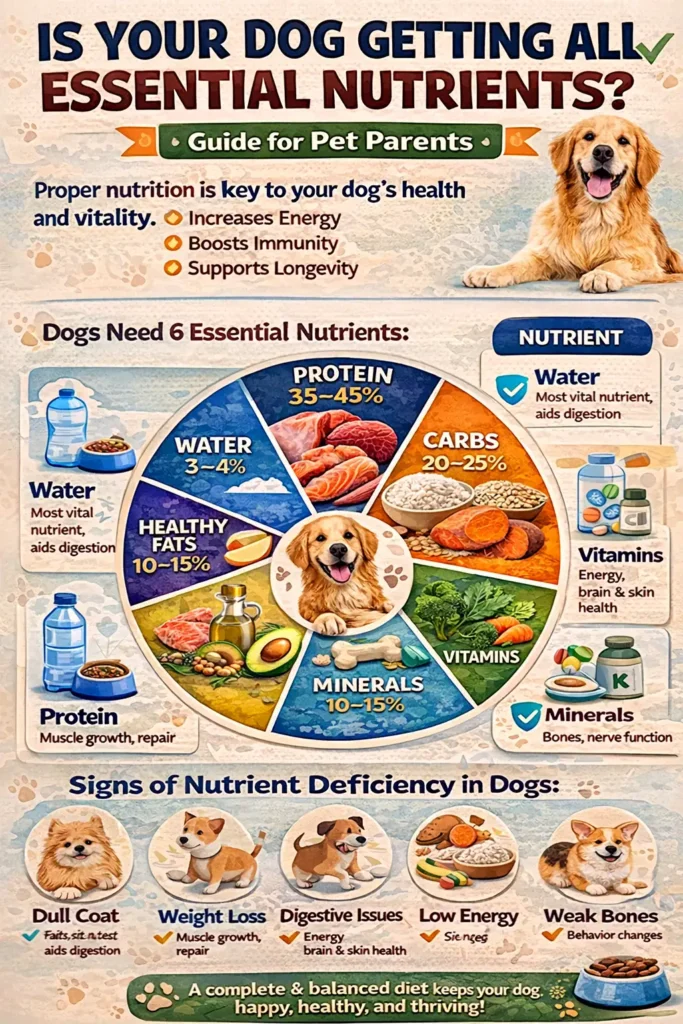
Scientific research and veterinary guidelines define six essential nutrient categories for dogs:
1. Water
- The most critical nutrient
- Regulates body temperature
- Supports digestion and nutrient absorption
2. Protein
- Builds muscles and tissues
- Provides essential amino acids
- Supports growth and repair
3. Fats
- Primary energy source
- Supports brain function and skin health
- Includes omega-3 and omega-6 fatty acids
Studies show fatty acid deficiencies can lead to dry coat and skin issues (PubMed Central)
4. Carbohydrates
- Provide energy
- Aid digestion
- Support gut health
5. Vitamins
- Essential for metabolism and immunity
- Includes vitamins A, B, D, E, and K
6. Minerals
- Strengthen bones and teeth
- Support nerve and muscle function
- Include calcium, phosphorus, iron, and zinc
These six nutrients form the foundation of canine nutrition (Veterinary Care at Your Fingertips)
What Does Science Say About Dog Nutrition?
According to research and guidelines from global institutions:
- Dogs must meet nutrient standards set by organizations like NRC, AAFCO, and FEDIAF
- Balanced diets ensure proper growth, reproduction, and maintenance (PubMed Central)
- Nutritional needs vary based on:
- Age (puppy, adult, senior)
- Breed and size
- Activity level
Studies in journals like The Journal of Nutrition highlight that nutrient balance is more important than ingredient type (ScienceDirect)
Signs Your Dog May Be Lacking Nutrients
Watch for these warning signs:
Physical Signs
- Dull coat or hair loss
- Weight loss or obesity
- Weak bones or joint issues
Behavioral Signs
- Low energy or lethargy
- Poor appetite
- Behavioral changes
How to Ensure Your Dog Gets All Essential Nutrients
1. Choose Complete & Balanced Food
Look for labels that meet:
- AAFCO standards
- NRC recommendations
2. Maintain Proper Portion Control
Overfeeding or underfeeding can cause nutrient imbalance.
3. Include Variety (If Home Feeding)
- Protein: chicken, fish, eggs
- Carbs: rice, oats
- Vegetables: carrots, pumpkin
4. Avoid Nutritional Myths
- Grain-free is not always better
- Raw diets are not always safer
Homemade vs Commercial Diets: Which Is Better?
| Factor | Commercial Food | Homemade Diet |
| Nutritional Balance | Scientifically formulated | Needs careful planning |
| Convenience | High | Time-consuming |
| Risk of Deficiency | Low | High (if unbalanced) |
Research shows many homemade diets lack essential nutrients if not properly formulated (ScienceDirect)
Common Mistakes Pet Parents Make
- Feeding only meat (lack of vitamins/minerals)
- Ignoring portion sizes
- Not adjusting diet with age
- Over-relying on treats
When Should You Consult a Vet?
- Sudden weight changes
- Chronic digestive issues
- Skin or coat problems
- Switching to homemade diet
References & Scientific Sources
- National Research Council
https://nap.nationalacademies.org - National Institutes of Health
https://www.nih.gov - American Veterinary Medical Association
https://www.avma.org - European Pet Food Industry Federation
https://www.fediaf.org
Conclusion
So, is your dog getting all essential nutrients?
✔If you’re feeding a complete and balanced diet — most likely yes.
But if you’re unsure, it’s always best to review your dog’s diet with a veterinarian.
Remember: Nutrition is not just about feeding—it’s about feeding right.

