
Many pet parents love sharing treats like milk or cheese with their dogs. But an important question arises:
“Are dogs lactose intolerant?”
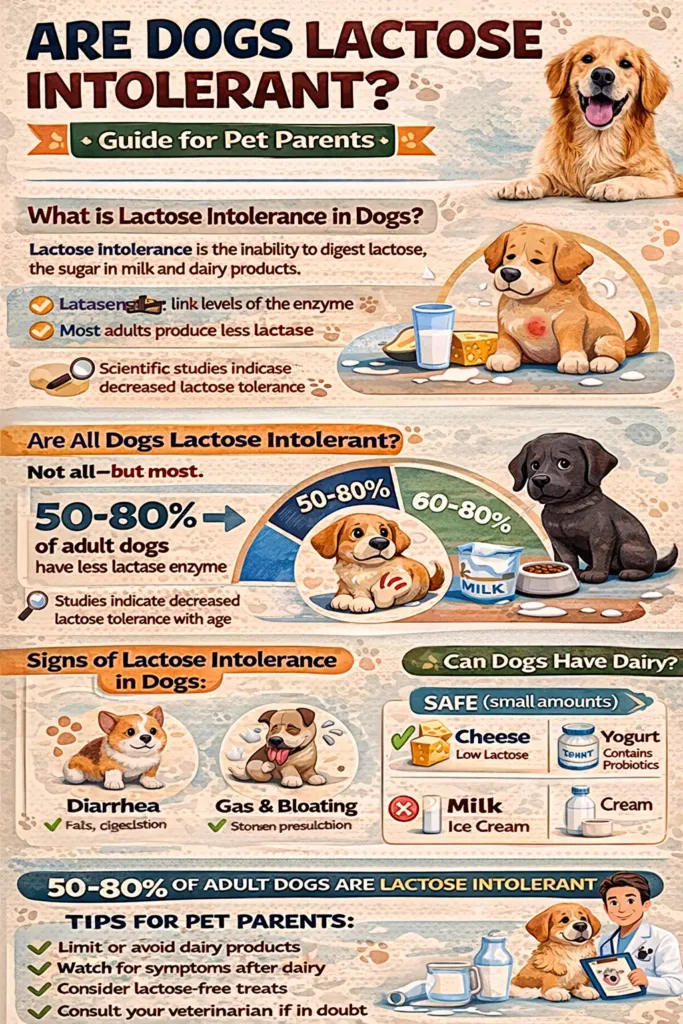
The answer is yes—many dogs are lactose intolerant, especially as they grow older. Understanding how your dog processes dairy can help prevent digestive issues and ensure better health.
What Is Lactose Intolerance in Dogs?
Lactose intolerance is the inability to digest lactose, the natural sugar found in milk and dairy products.
Dogs need an enzyme called lactase to break down lactose. When this enzyme is lacking, lactose remains undigested and causes digestive discomfort.
Scientific explanation:
Lactose intolerance occurs when the body cannot break down lactose due to low lactase activity, leading to symptoms like gas, bloating, and diarrhea (ScienceDirect)
Are All Dogs Lactose Intolerant?
Not all dogs are lactose intolerant—but most adult dogs have reduced tolerance.
Why?
- Puppies produce high levels of lactase to digest their mother’s milk
- After weaning, lactase production declines naturally
- This makes adult dogs more prone to lactose intolerance
Research confirms that many adult dogs struggle to digest dairy due to reduced enzyme production (Biology Insights)
Symptoms of Lactose Intolerance in Dogs
If your dog is lactose intolerant, you may notice:
Common Signs:
- Diarrhea
- Gas and bloating
- Vomiting
- Stomach discomfort
Dogs that consume lactose without proper digestion often experience gastrointestinal upset (Rover.com)
What Does Science Say?
Scientific studies and veterinary research provide deeper insights:
- A 2022 study in the Journal of Applied Animal Nutrition found that lactose-containing milk caused digestive issues in dogs, while lactose-free alternatives reduced symptoms (Directory of Open Access Journals)
- Research in veterinary medicine shows that food intolerances (including dairy) can affect digestion, skin, and overall health (PubMed)
Can Dogs Have Dairy Products?
Safe (in small amounts for some dogs):
- Cheese (low lactose)
- Yogurt (contains probiotics)
Risky:
- Milk
- Ice cream
- Cream
Some dogs tolerate small amounts, but others may react even to tiny quantities.
Why Dairy Isn’t Essential for Dogs
Unlike humans, dogs do not need dairy in their diet.
- No essential nutrients are exclusive to milk
- All nutrients can be obtained from balanced dog food
- Dairy can cause more harm than benefit in sensitive dogs
How to Safely Feed Dairy (If at All)
If you want to give dairy as a treat:
- Start with very small quantities
- Monitor for reactions
- Prefer low-lactose options
- Avoid frequent feeding
Lactose-Free Alternatives for Dogs
Better options include:
- Lactose-free dog milk
- Plant-based alternatives (vet-approved only)
- Regular balanced dog food
When Should You Avoid Dairy Completely?
Avoid dairy if your dog:
- Has a sensitive stomach
- Shows symptoms after consuming milk
- Has a history of digestive issues
Common Myths About Dogs and Milk
Myth 1: Dogs Need Milk for Calcium
❌ False — Dogs get calcium from balanced diets
Myth 2: All Dogs Can Drink Milk
❌ False — Many dogs are lactose intolerant
References & Scientific Sources
- ScienceDirect
https://www.sciencedirect.com - National Institutes of Health
https://www.nih.gov - Journal of Applied Animal Nutrition
https://www.cambridge.org - American Veterinary Medical Association
https://www.avma.org
Conclusion
So, are dogs lactose intolerant?
✔Many are—especially adult dogs.
While some dogs can tolerate small amounts of dairy, it’s generally safer to limit or avoid it altogether. A balanced, species-appropriate diet is always the best choice.

