
The Complete Vet-Backed Guide for Pet Parents & Care Givers
When Can a Dog Get Pregnant?
A female dog can only become pregnant during the fertile stage of her heat cycle, known as estrus. Most dogs first become capable of reproduction between 6 and 18 months of age, depending on breed and body size. Small breeds often mature earlier, while giant breeds may not reach sexual maturity until 18–24 months.
Many new pet parents ask, “When do dogs get periods?” Dogs do not have periods in the same way humans do. Instead, they go into heat, also called the estrous cycle. During this cycle, hormone levels change, the ovaries release eggs, and the female becomes fertile.
Typical age of first heat:
- Small breeds: 6–8 months
- Medium breeds: 8–12 months
- Large breeds: 12–18 months
- Giant breeds: Up to 24 months
Most female dogs come into heat approximately every 6–8 months, although some breeds cycle only once yearly.
When Do Dogs Get Periods?
The phrase “dogs get periods” is commonly used, but medically the process is called the estrous or heat cycle.
The canine heat cycle has four stages:
1. Proestrus
Duration: 7–10 days
Signs include:
- Swollen vulva
- Bloody vaginal discharge
- Increased urination
- Attraction of male dogs
- Refusal to mate
At this stage, your dog may look like she is “having a period,” but she is usually not yet fertile.
2. Estrus
Duration: 5–10 days
This is the true fertile stage.
Signs include:
- Lighter pink or straw-colored discharge
- Female becomes receptive to male dogs
- Tail held to one side (“flagging”)
- Ovulation occurs
A dog is most likely to become pregnant during estrus.
3. Diestrus
Duration: About 60 days
During this stage:
- Fertility ends
- Hormone levels shift toward progesterone
- If the dog conceived, pregnancy develops
- If not, the body still behaves hormonally as though pregnancy may have occurred
This is why some dogs experience false pregnancy.
4. Anestrus
Duration: 4–6 months
This is the resting stage between heat cycles.
Can a Dog Get Pregnant When Not in Heat?
No. A dog cannot get pregnant when she is not in heat.
Pregnancy is only possible during the estrus phase because:
- Eggs are released only during estrus
- Hormones prepare the uterus only during this time
- The reproductive tract becomes capable of supporting fertilization only during heat
However, many owners become confused because some dogs have:
- Silent heat cycles
- Minimal bleeding
- Irregular cycles
- Heat without obvious symptoms
In these situations, the dog may actually be in heat even if it is not obvious.
Silent heat is more common in:
- Young dogs during their first cycles
- Older dogs
- Certain breeds
- Dogs with hormonal disorders
Veterinarians may diagnose silent heat using:
- Vaginal cytology
- Progesterone testing
- Ultrasound
Can a Dog Get Pregnant While Still Bleeding?
Yes. Many female dogs can become pregnant while they are still bleeding.
Unlike humans, a dog’s fertile period often begins near the end of the bleeding phase or just after the bleeding becomes lighter.
This is why pet parents should never assume the risk of pregnancy is over simply because:
- The bleeding has reduced
- The discharge has changed color
- The dog “looks normal” again
Male dogs can detect fertility even when owners cannot.
When Is a Dog Most Fertile?
Most dogs are most fertile between days 9 and 14 after the start of heat. However, every dog is different.
Factors that influence timing include:
- Breed
- Age
- Previous reproductive history
- Underlying disease
Ovulation usually occurs 24–48 hours after the luteinizing hormone surge. Eggs then mature over another 48 hours.
Modern veterinary reproduction specialists often use:
- Serial progesterone blood tests
- Vaginal cytology
- Vaginoscopy
These tests help determine the exact fertile window.
How Long Are Dogs Pregnant?
The average canine pregnancy lasts approximately 63 days from ovulation. However, because mating may occur several days before or after ovulation, the practical range from breeding to birth is often 58–68 days.
Typical pregnancy timeline:
- Day 0: Ovulation or breeding
- Day 21: Embryos can sometimes be seen by ultrasound
- Day 28–35: Pregnancy confirmed by ultrasound or relaxin test
- Day 45: Skeletons visible on X-ray
- Day 58–63: Puppies born
When Does a Dog Give Birth?
A dog usually gives birth approximately 63 days after ovulation.
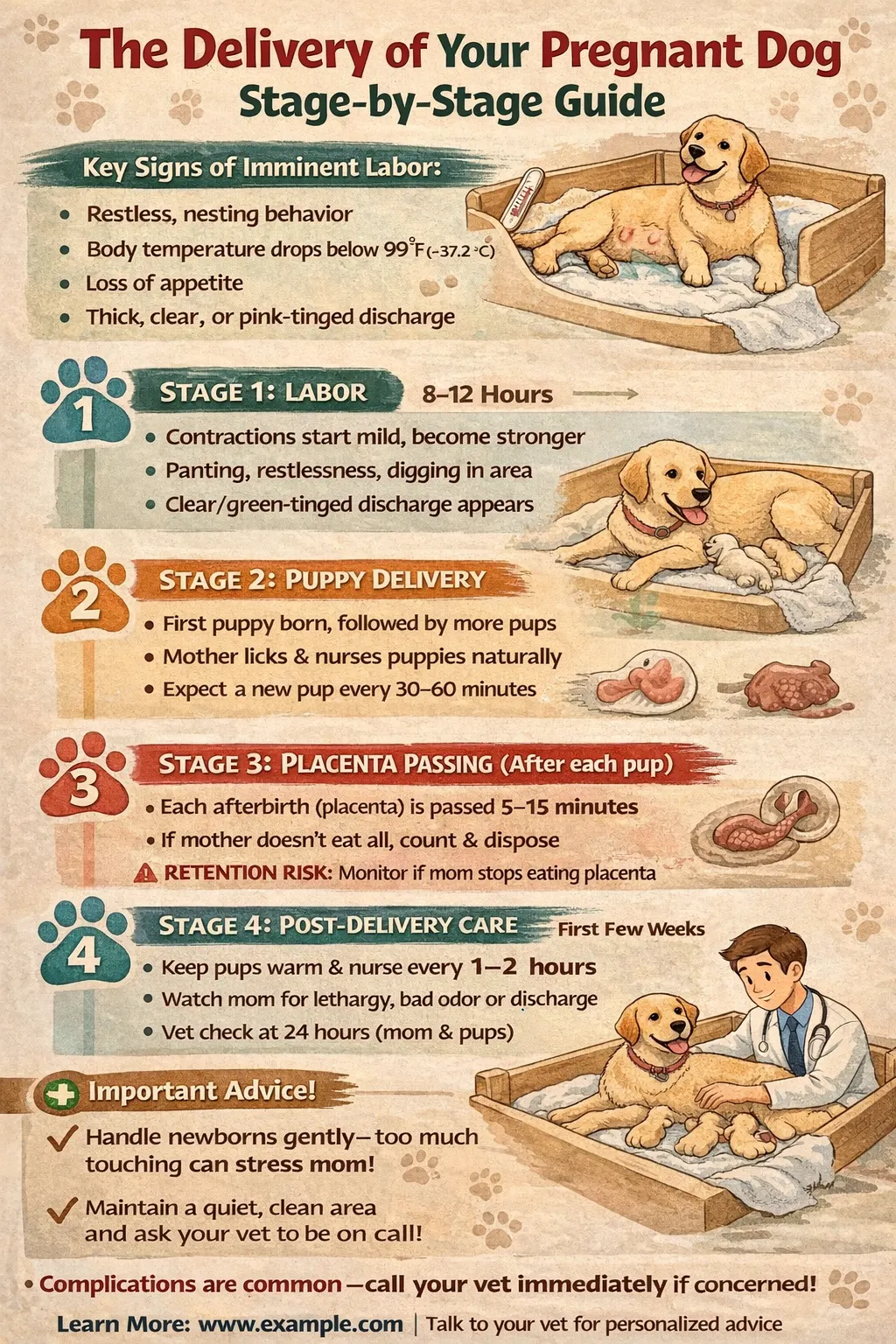
Signs that labor is approaching include:
- Nesting behavior
- Restlessness
- Refusing food
- Panting
- Shivering
- Milk production
- Drop in rectal temperature below 99°F (37.2°C)
A temperature drop usually occurs 12–24 hours before labor begins.
The Three Stages of Canine Labor
Stage 1: Early Labor
Duration: 6–12 hours, sometimes up to 24 hours
Signs:
- Pacing
- Panting
- Hiding
- Shivering
- Nesting
The cervix begins to dilate.
Stage 2: Active Labor
This is when puppies are delivered.
Normal findings:
- Puppies usually arrive every 30–60 minutes
- It may take up to 2 hours between puppies
- Green discharge before the first puppy may indicate placental separation
Emergency warning signs:
- More than 2 hours between puppies
- Strong contractions for over 30 minutes without a puppy
- Excessive bleeding
- Collapse
Stage 3: Placenta Delivery
The placenta usually follows each puppy.
Count the placentas. Retained placentas can lead to infection.
False Pregnancy in Dogs
False pregnancy, also called pseudopregnancy, occurs because progesterone and prolactin remain elevated after heat.
Symptoms may include:
- Enlarged mammary glands
- Milk production
- Nesting behavior
- Carrying toys like puppies
- Reduced appetite
False pregnancy typically occurs 6–12 weeks after heat.
Modern veterinary medicine recognizes pseudopregnancy as a common hormonal condition rather than a behavioral problem.
Latest Veterinary Insights on Canine Pregnancy and Heat Cycles
Recent veterinary reproductive research has improved understanding of:
Hormonal Testing
Progesterone testing is now considered the gold standard for determining:
- Ovulation
- Fertile period
- Best breeding date
- Planned cesarean section timing
Relaxin Blood Test
The relaxin hormone blood test can confirm pregnancy after approximately 25–30 days.
Ultrasound Advances
Modern ultrasound can:
- Detect pregnancy early
- Assess fetal heartbeat
- Identify fetal distress
- Estimate litter size
Cesarean Timing
Veterinary gynecological studies increasingly recommend planned cesarean delivery in high-risk breeds such as:
- Bulldogs
- Pugs
- French Bulldogs
These breeds often struggle to deliver naturally because of narrow hips and large puppy heads.
Can I Dog Sled While Pregnant?
If you are asking whether a pregnant dog should pull a sled or participate in strenuous athletic activity, the answer is generally no.
Pregnant dogs should avoid:
- Sled pulling
- Intense running
- Agility competitions
- Long-distance hiking
- Heavy work
During the first few weeks of pregnancy, light exercise is acceptable. However, as pregnancy progresses, high-intensity activity may:
- Increase risk of injury
- Cause overheating
- Trigger stress
- Lead to miscarriage or premature labor
Veterinary sports medicine experts recommend:
- Gentle walks
- Controlled low-impact activity
- Avoiding exhaustion
- Stopping strenuous work by the second half of pregnancy
Working sled dogs, hunting dogs, and sporting breeds should be retired from intense activity immediately once pregnancy is confirmed.
What Should You Feed a Pregnant Dog?
Nutritional needs increase significantly during pregnancy.
First half of pregnancy:
- Normal maintenance diet
- No overfeeding
Second half of pregnancy:
- Increase calories gradually
- Feed high-quality puppy food
- Divide meals into smaller portions
Essential nutrients include:
- High-quality protein
- DHA for puppy brain development
- Calcium and phosphorus in correct balance
- Omega-3 fatty acids
Avoid giving calcium supplements unless specifically prescribed, because excessive calcium can increase the risk of eclampsia after birth.
When Should You See a Vet?
Seek veterinary care immediately if:
- Your dog is pregnant and bleeding heavily
- She is in labor for more than 30 minutes without producing a puppy
- More than 2 hours pass between puppies
- She has green discharge without a puppy
- She develops fever, vomiting, or collapse
- Pregnancy extends beyond 68 days
Gynecological Diseases and Pregnancy Complications in Dogs
Pregnancy in dogs is not always straightforward. Several reproductive diseases, infections, and emergencies can develop before, during, or after pregnancy. Early recognition is critical because some complications can rapidly become life-threatening for both the mother and her puppies.
1. Pyometra
Pyometra is a severe infection of the uterus that usually occurs after a heat cycle. It is one of the most dangerous gynecological emergencies in female dogs.
There are two forms:
- Open pyometra: pus drains from the vulva
- Closed pyometra: the cervix is closed and infection remains trapped inside the uterus
Early symptoms:
- Increased thirst
- Lethargy
- Fever
- Reduced appetite
- Vaginal discharge with foul smell
- Swollen abdomen
- Vomiting
Why it matters:
Closed pyometra can mimic pregnancy because the abdomen enlarges. Without treatment, the uterus can rupture and cause fatal sepsis.
2. Miscarriage or Fetal Resorption
Dogs may lose puppies during pregnancy due to infection, hormonal problems, poor nutrition, trauma, genetic abnormalities, or infectious disease.
Early symptoms:
- Sudden decrease in abdominal size
- Bloody or dark vaginal discharge
- Loss of appetite
- Fever
- Depression
- Disappearance of previously detected embryos on ultrasound
Fetal resorption often occurs early in pregnancy and may not produce obvious signs.
3. Dystocia (Difficult Birth)
Dystocia means abnormal or difficult labor. It is especially common in brachycephalic breeds such as Bulldogs, Pugs, and French Bulldogs.
Early warning signs:
- Strong contractions for more than 30 minutes without a puppy
- More than 2 hours between puppies
- Green discharge before the first puppy
- Puppy visibly stuck
- Extreme weakness or collapse
Potential causes:
- Oversized puppies
- Narrow pelvis
- Weak uterine contractions
- Incorrect fetal position
This is an emergency and often requires cesarean section.
4. Eclampsia (Milk Fever)
Eclampsia is caused by dangerously low calcium levels after birth, usually in small dogs nursing large litters.
Early symptoms:
- Restlessness
- Trembling
- Panting
- Muscle twitching
- Stiff gait
- Fever
Advanced symptoms:
- Seizures
- Collapse
- Death if untreated
5. Mastitis
Mastitis is infection of the mammary glands after puppies are born.
Early symptoms:
- Red, swollen, painful mammary glands
- Refusal to let puppies nurse
- Fever
- Thick, bloody, or abnormal milk
6. Metritis
Metritis is a serious uterine infection occurring shortly after birth.
Early symptoms:
- Fever
- Foul-smelling vaginal discharge
- Depression
- Refusal to care for puppies
- Vomiting
7. Gestational Diabetes
Although less common than in humans, dogs can develop diabetes during pregnancy.
Early symptoms:
- Excessive thirst
- Frequent urination
- Weight loss despite eating
- Weakness
8. False Pregnancy (Pseudopregnancy)
False pregnancy may resemble real pregnancy.
Symptoms:
- Swollen mammary glands
- Nesting
- Carrying toys
- Milk production
- No puppies present on ultrasound
Sexually Transmitted and Communicable Reproductive Diseases in Dogs
Dogs can acquire sexually transmitted infections through mating. These infections can reduce fertility, cause miscarriage, and spread to other dogs.
1. Brucellosis
Canine brucellosis is caused by Brucella canis and is one of the most important sexually transmitted diseases in dogs.
How it spreads:
- Mating
- Contact with reproductive fluids
- Contact with aborted fetuses or placentas
Symptoms in females:
- Infertility
- Late-term abortion
- Vaginal discharge
- Failure to conceive
Symptoms in males:
- Enlarged testicles
- Pain
- Infertility
Brucellosis is also zoonotic and can rarely infect humans.
2. Canine Herpesvirus
This virus can spread during mating or close contact.
Symptoms:
- Infertility
- Miscarriage
- Weak newborn puppies
- Puppy death shortly after birth
3. Canine Transmissible Venereal Tumor (TVT)
TVT is a contagious cancer spread through mating.
Symptoms:
- Bloody discharge
- Genital swelling
- Visible cauliflower-like mass near the vulva or penis
4. Bacterial Vaginitis
Bacterial infection of the vagina can occur before breeding or during pregnancy.
Symptoms:
- Vaginal discharge
- Frequent licking
- Discomfort during urination
Zoonotic Diseases Pet Parents Should Know
Some diseases affecting pregnant dogs can also spread to humans.
Important zoonotic diseases include:
- Brucellosis (Brucella canis)
- Rabies
- Leptospirosis
- Ringworm
- Salmonellosis
- Campylobacter infection
- Toxoplasmosis
- Giardia
- Roundworms (Toxocara)
- Hookworms
- Scabies (mange)
- Methicillin-resistant Staphylococcus aureus (MRSA)
Pregnant women, children, elderly individuals, and immunocompromised people should be especially careful when handling:
- Vaginal discharge
- Placenta
- Aborted puppies
- Urine or feces
Always wear gloves and wash hands thoroughly.
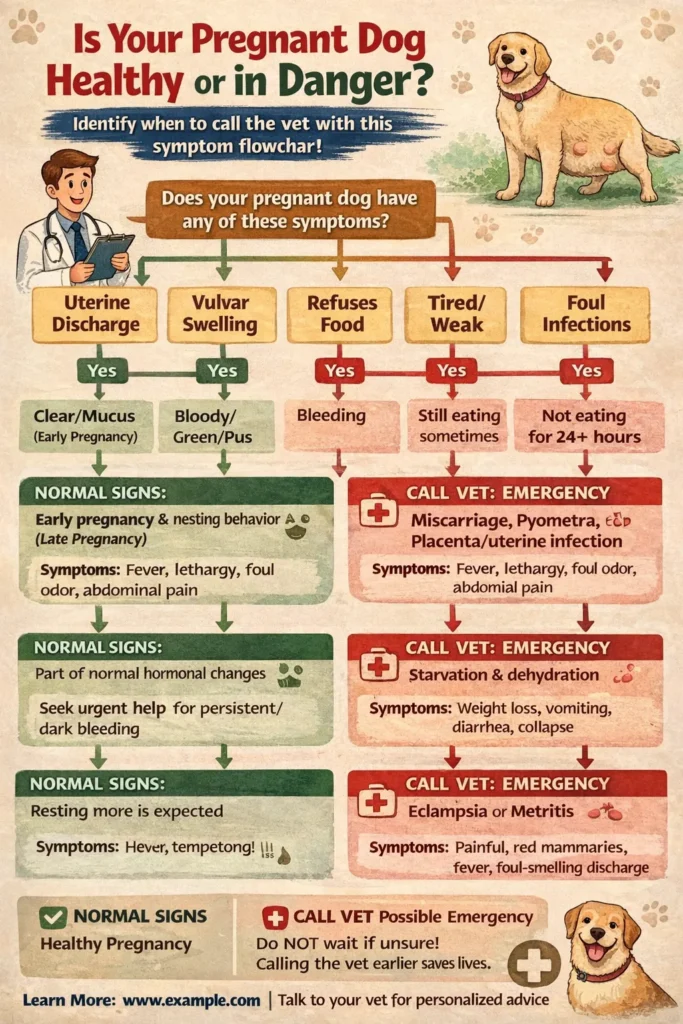
Flow Chart: What Do the Symptoms Mean?
Dog in heat or pregnant?
│
├── Bloody discharge + swollen vulva + male dogs interested
│ └── Normal heat cycle (proestrus/estrus)
│
├── No puppies but nesting + milk production
│ └── False pregnancy
│
├── Vaginal discharge + fever + increased thirst
│ ├── Foul-smelling discharge
│ │ └── Pyometra or metritis
│ └── During pregnancy
│ └── Miscarriage or infection
│
├── Strong labor contractions but no puppy
│ └── Dystocia (emergency)
│
├── Trembling + panting + seizures after birth
│ └── Eclampsia (low calcium emergency)
│
├── Swollen painful mammary glands after birth
│ └── Mastitis
│
├── Excessive thirst + urination during pregnancy
│ └── Possible gestational diabetes
│
├── Repeated infertility or abortion after mating
│ └── Brucellosis or herpesvirus
│
└── Bloody genital mass after mating
└── Transmissible venereal tumor (TVT)
Quick Comparison: Physiological vs Pathological Signs
| Sign | Usually Physiological | Possibly Pathological |
| Mild bloody discharge during heat | Yes | No |
| Light pink discharge during estrus | Yes | No |
| Nesting near due date | Yes | No |
| Mild panting before labor | Yes | No |
| Foul-smelling discharge | No | Yes |
| Fever during pregnancy | No | Yes |
| Green discharge before first puppy | No | Yes |
| Heavy bleeding | No | Yes |
| Seizures after birth | No | Yes |
| Strong contractions without puppy | No | Yes |
| Swollen painful mammary glands | No | Yes |
Frequently Asked Questions
When do dogs get pregnant?
Dogs become pregnant only during the estrus stage of their heat cycle, usually between days 9–14 after the heat begins.
When do dogs give birth?
Dogs usually give birth about 63 days after ovulation.
When do dogs get periods?
Dogs do not get periods like humans. They experience heat cycles approximately every 6–8 months.
Can a dog get pregnant when not in heat?
No. Pregnancy is only possible during estrus.
Can a dog still get pregnant if she is bleeding?
Yes. Many dogs remain fertile while the discharge is still present.
Can a pregnant dog exercise?
Yes, but only lightly. Strenuous activity should be avoided.
Can a pregnant dog sled or pull heavy loads?
No. Athletic work and sled pulling are unsafe during pregnancy.
Conclusion
Understanding when dogs get pregnant, when they go into heat, and when they give birth is essential for every pet parent. The biggest mistake owners make is assuming that a dog cannot become pregnant while she is still bleeding or when her heat signs seem mild.
Modern veterinary medicine clearly shows that fertility is controlled by the estrus cycle, and silent heats or irregular symptoms can easily lead to accidental pregnancy.
If you are unsure whether your dog is in heat, pregnant, or approaching labor, consult your veterinarian immediately. Early diagnosis and proper reproductive care can protect both the mother and her puppies.
References
- American College of Theriogenologists – Canine Estrous Cycle
https://www.therio.org/ - Merck Veterinary Manual – Reproductive Diseases of Dogs
https://www.merckvetmanual.com/ - VCA Animal Hospitals – Pregnancy in Dogs
https://vcahospitals.com/know-your-pet/pregnancy-in-dogs - American Kennel Club – Dog Heat Cycle and Pregnancy
https://www.akc.org/expert-advice/health/dog-in-heat/ - Concannon PW. Reproductive Cycles of the Domestic Bitch. Animal Reproduction Science.
https://www.sciencedirect.com/ - England GCW, Russo M. Ultrasonographic Characteristics of Early Pregnancy in the Bitch. Journal of Reproduction and Fertility.
https://pubmed.ncbi.nlm.nih.gov/ - Johnston SD, Kustritz MVR, Olson PNS. Canine and Feline Theriogenology.
https://onlinelibrary.wiley.com/ - Recent review on canine reproductive endocrinology.
https://www.frontiersin.org/articles/10.3389/fvets.2023.1176002/full

